From Consumable to Durable: Compliance and Longevity Are Reshaping Wooden Kitchenware Sourcing Logic
For the past decade, wooden cutting boards and serving trays were largely shelved as “kitchen consumables”—price-sensitive, short replacement cycles, and a sustainability narrative that rarely moved beyond generic “natural and eco-friendly” claims. Entering 2026, however, the category is undergoing a revaluation. The shift is not driven by marketing language, but by tightening signals on both the demand and compliance sides.
The Demand Gap: Search Growth Outpaces Supply
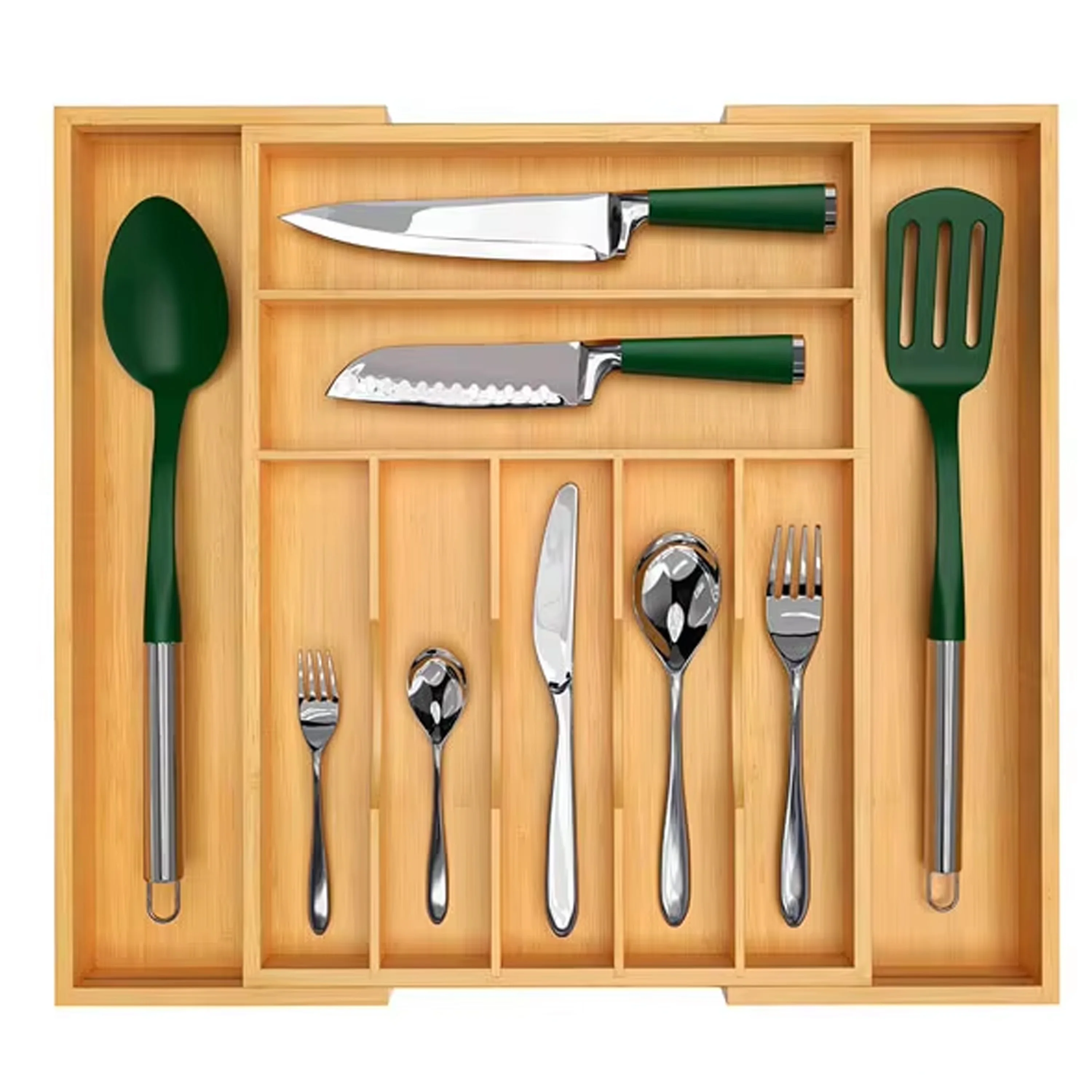
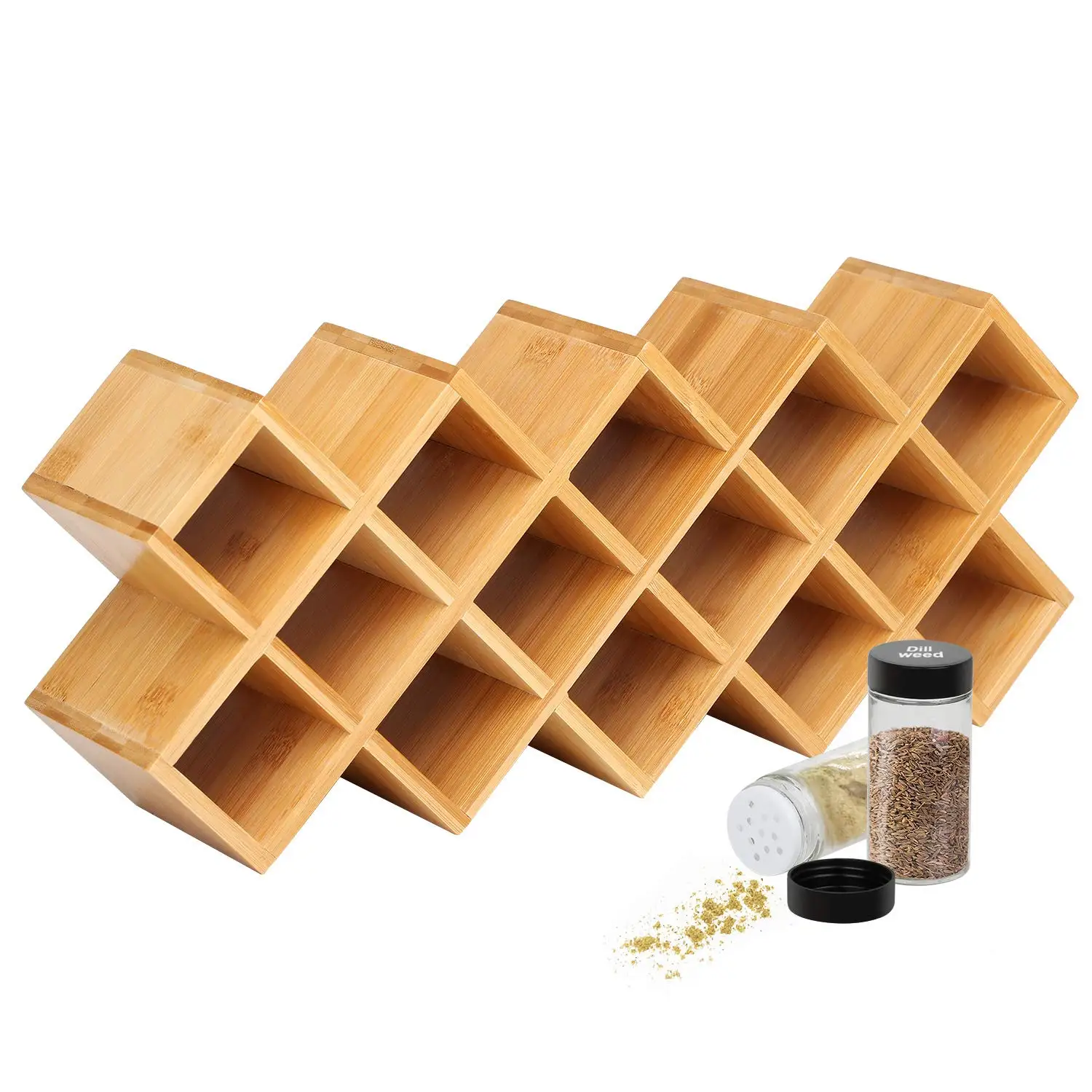
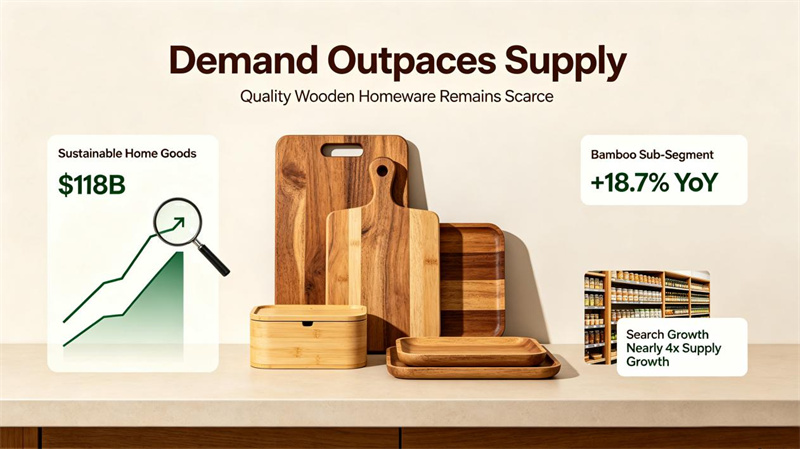
Platform data points the way. According to Statista’s Global Sustainable Home Market Report, the global sustainable home goods market reached $118 billion in 2025, with the bamboo homeware sub-segment growing 18.7% year-over-year—compared to just 3.1% for traditional plastic and metal homeware during the same period. A more direct signal comes from Amazon US: in Q4 2025, search volume for “bamboo kitchen organizer” grew 47% year-over-year, while the number of active sellers under that keyword grew only 12%, meaning demand growth was nearly four times supply growth. The structural gap between demand and supply suggests that quality supply remains relatively scarce.
Trend One: Single-Function Is Giving Way to “One-Board, Multiple-Uses”
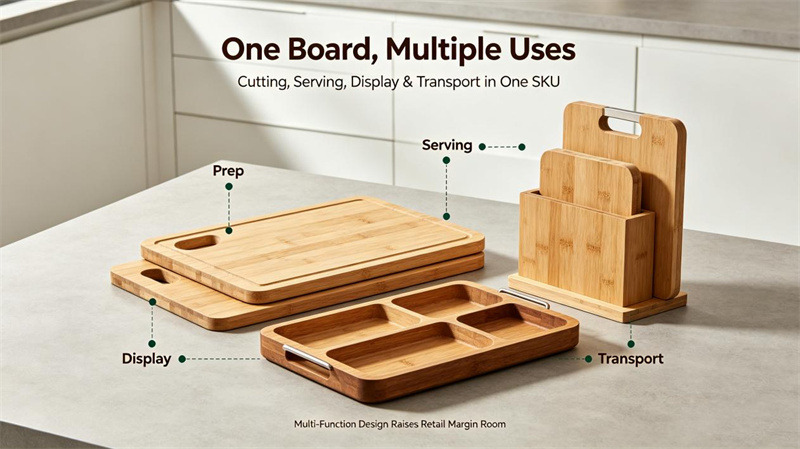
The most visible product-side shift in 2026 wooden kitchenware is the blurring of boundaries between cutting boards and serving trays. Reversible boards with juice grooves, compartment trays with built-in handles, and multi-piece sets designed for both prep and transport are displacing flat boards that only cut and shallow platters that only hold one type of food. The commercial logic is straightforward: a single product covers prep, serving, display, and transport—reducing consumer decision friction while giving buyers higher per-unit retail margin room. For B2B buyers, the same SKU can enter shelving in kitchenware, tabletop, and home décor categories simultaneously, significantly improving selection efficiency.
Trend Two: The Durability Narrative Is Replacing “Biodegradable” Slogans
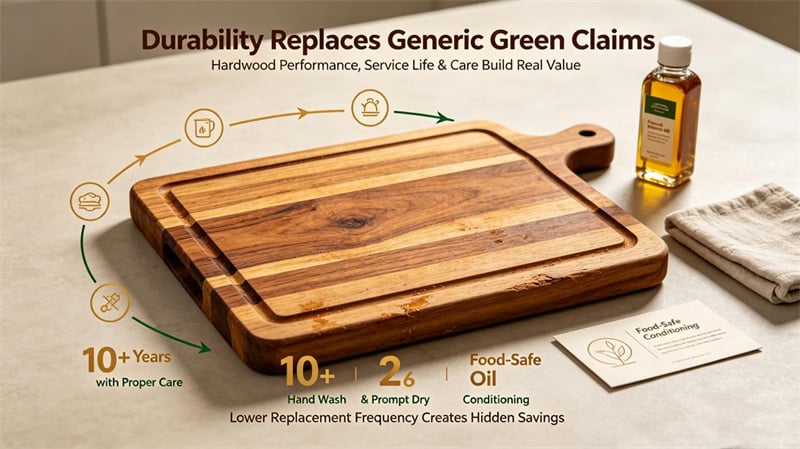
One easily overlooked change is that the procurement side’s definition of “eco-friendly” is shifting from material attributes to service life. Industry research indicates that overseas buyers are willing to pay a premium for healthy, durable, and repairable products, but remain cautious about standalone “biodegradable” concept labels. This means hardwoods such as acacia—with high density, knife-friendly surfaces, and a service life of a decade or more when properly maintained—are seeing their longevity become a more persuasive purchasing rationale than “renewable” alone: the hidden cost savings from reduced replacement frequency hold true for both retailers and end consumers. At the same time, the maintenance threshold for wooden products is being brought to the forefront: hand-washing, prompt drying, and periodic food-safe oil conditioning are basic prerequisites for maintaining performance, not optional extras. Suppliers who can translate care guidance into product design language—non-slip feet, drainage-friendly structures, and included care instructions—are better positioned to build a professional image at retail.
Trend Three: Certification and Verifiable Compliance Are Becoming the “Entry Ticket”
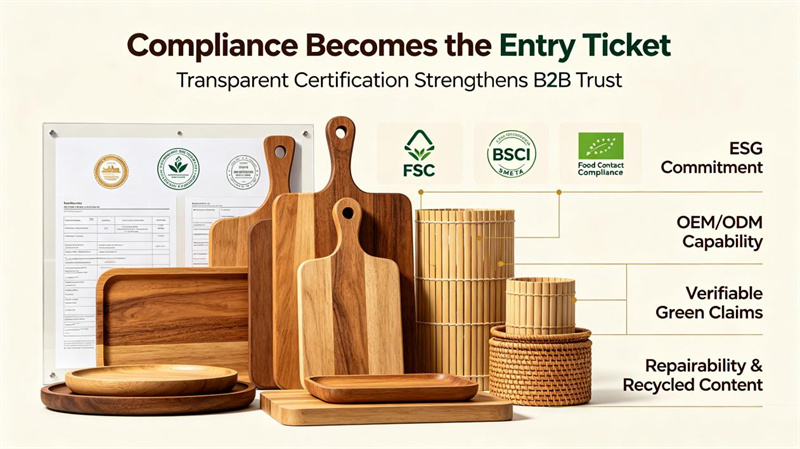
A signal from the recent Canton Fair deserves attention: the logic of Chinese kitchenware exports relying on low cost and high volume is changing. Western markets are introducing more granular rules on food-contact materials, repairability, and recycled content, and green claims lacking verifiable evidence risk being classified as “greenwashing”. On the B2B procurement side, more than 68% of large buyers in the EU and North America prioritize suppliers with ESG commitments and OEM/ODM capabilities, with FSC, BSCI, SMETA, and food-contact compliance shifting from “bonus points” to “baseline conditions”. For bamboo and wooden kitchenware, this means the competitive dimension has moved from “who is cheaper” to “whose compliance chain is more transparent and whose durability narrative withstands scrutiny”.
Implications for Suppliers
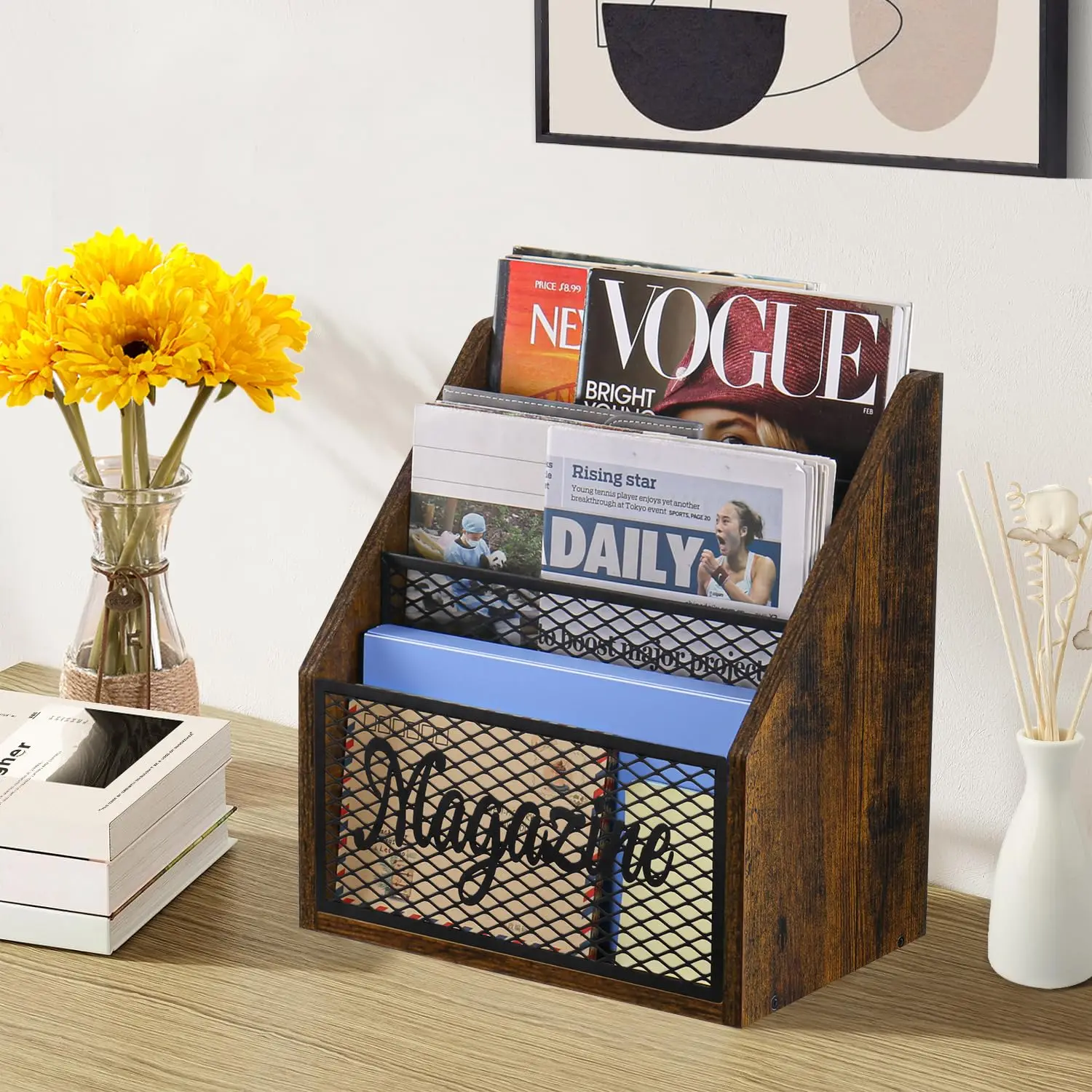
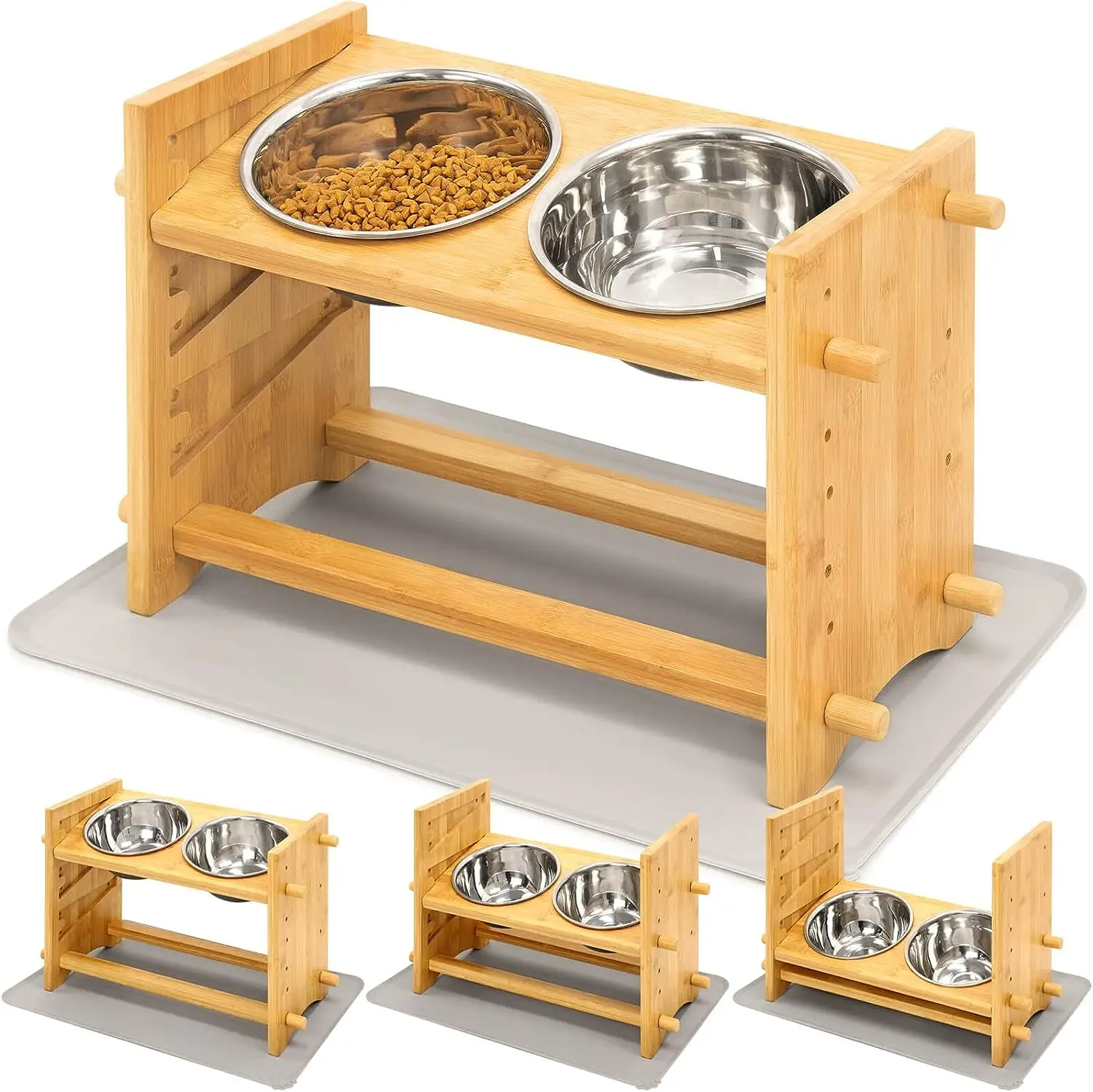
All three trends point in the same direction: wooden kitchenware is reclaiming its value position as “durable homeware and decorative object” rather than “kitchen consumable.” For suppliers with both acacia and bamboo processing capabilities, the strategic emphasis should shift from presenting cutting boards or trays as isolated items toward developing them as a “tabletop and surface woodware system”—using integrated multi-function design to lift average order value, extending living-space scenarios (kitchen, entryway, coffee table, vanity) to widen search entry points, and building B2B trust through verifiable certification and care systems. In a window where demand growth still significantly outpaces supply growth, suppliers who complete this narrative shift first will be better positioned to take the initiative in the next procurement cycle.
 Hot News
2026-11-18
2026-09-16
2026-09-16
2026-08-24
2026-03-30
2026-03-15
 EN